
Meet Jen Kirch!
Here at the Schmidt Group, Jen is an Executive Recruiter. You can find her searching high and low for top talent for our clients and setting candidates up for successful careers. She has an incredible eye for detail which is mutually beneficial for companies and talent alike. After hours it’s a safe bet that you can find her at the barn she shares with Liz our Head of Marketing & Research. They love going on adventures with their horses and kids in tow all over the Gulf South. She is also a mother of two active teenagers so to say she is the Queen of Multitasking would be an understatement!


Connect with Ron Durel
Connect with Bonnie
Executive Impact Player of the Month
Proven and successful executives looking to join you to help your business grow.
Below is this week’s Executive Impact Player of the month, this individual could be the catalyst for growth on your team!
Executive Impact Player
- Medical Device leader with over 26 years of experience in development of implants, instruments, disposables, and capital medical equipment.
- Led high performing departments in both R&D and Project/Program/Portfolio Management at organizations ranging from small startup (<20 FTE), to mid-sized companies (<5000 FTE), to large multinational organizations (>100,000 FTE).
- Strong technical background and high personal standards, combined with strong drive to succeed, has generated consistent and impactful business performance.
- International experience in the Americas, Asia, Oceania, and Europe ranged from designing, staffing, and launching an R&D center in China to covering early clinical cases in Europe in conjunction with new product launches.
- Seeking a senior leadership opportunity in the medtech space that can leverage my skills; open to a position with extensive travel, remote work, or an on-site opportunity in the Tampa Bay area.
Would you like to learn more about this individual?
I will help coordinate a time to talk with one of our owners.
Whether you need incredible talent for your team or searching for new opportunities, Sanford Rose Executive Search can help! We are experts in client and candidate relationships. We have helped over 1,000 candidates find life-changing opportunities utilizing our extensive network and professional approach. We maximize our 45 years of combined industry experience to better understand the real aspirations and needs of those we engage. With over 60,000 potential candidates in our database we can help you find high performing qualified talent quickly.
Schedule a time with Neal Hightower
Schedule a time with Tim Schmidt

As we begin to wrap up Mardi Gras season here in the Big Easy we gear up for Lent. No matter your religious affiliation here we all line up to pick up catfish at our local churches. Here’s a quick and easy recipe for blackened catfish a crowd favorite here!
Blackend Catfish
- 4 Catfish Fillets
- 2 Tbsp. Paprika
- 1 Tbsp. Italian Seasoning
- 1/4 Tbsp. Cayenne Pepper
- Tony’s Creole Seasoning (to Taste)
- 2 Lemon Wedges
- 2-4 Tbsp. of Extra Virgin Olive Oil
Directions:
- Season catfish with all seasonings and rub into the fillets.
- Pour oil into skillet over medium-high heat.
- Place two fillets at a time in a skillet and let cook for 4 minutes on each side. Remove from skillet.
- If you like, add your vegetables of choice to the skillet (add more oil if needed), and sauté until desired doneness.
The Story of Mardi Gras
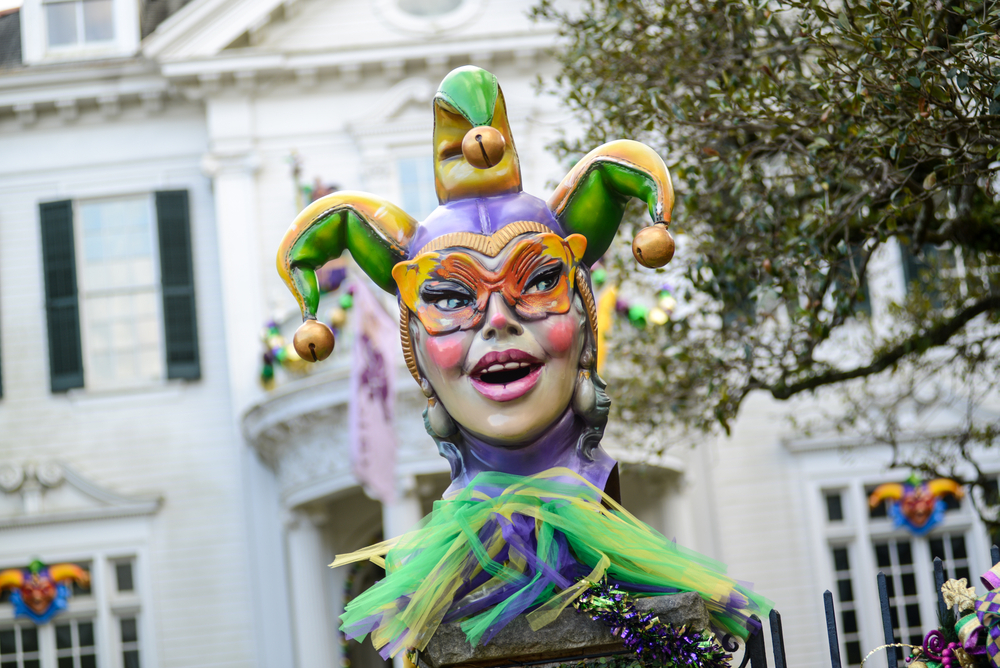 |
On March 2, 1699, French-Canadian explorer Jean Baptiste Le Moyne Sieur de Bienville arrived at a plot of ground 60 miles directly south of New Orleans, and named it "Pointe du Mardi Gras" when his men realized it was the eve of the festive holiday. Bienville also established "Fort Louis de la Louisiane" (which is now Mobile) in 1702. In 1703, the tiny settlement of Fort Louis de la Mobile celebrated America's very first Mardi Gras.
In 1704, Mobile established a secret society (Masque de la Mobile), similar to those that form our current Mardi Gras krewes. It lasted until 1709. In 1710, the "Boeuf Gras Society" was formed and paraded from 1711 through 1861. The procession was held with a huge bull's head pushed along on wheels by 16 men. Later, Rex would parade with an actual bull, draped in white and signaling the coming Lenten meat fast. This occurred on Fat Tuesday.
New Orleans was established in 1718 by Bienville. By the 1730s, Mardi Gras was celebrated openly in New Orleans, but not with the parades we know today. In the early 1740s, Louisiana's governor, the Marquis de Vaudreuil, established elegant society balls, which became the model for the New Orleans Mardi Gras balls of today.
The earliest reference to Mardi Gras "Carnival" appears in a 1781 report to the Spanish colonial governing body. That year, the Perseverance Benevolent & Mutual Aid Association was the first of hundreds of clubs and carnival organizations formed in New Orleans.
By the late 1830s, New Orleans held street processions of maskers with carriages and horseback riders to celebrate Mardi Gras. Dazzling gaslight torches, or "flambeaux," lit the way for the krewe's members and lent each event an exciting air of romance and festivity. In 1856, six young Mobile natives formed the Mistick Krewe of Comus, invoking John Milton's hero Comus to represent their organization. Comus brought magic and mystery to New Orleans with dazzling floats (known as tableaux cars) and masked balls. Krewe members remained anonymous.
In 1870, Mardi Gras' second Krewe, the Twelfth Night Revelers, was formed. This is also the first recorded account of Mardi Gras "throws."
Newspapers began to announce Mardi Gras events in advance, and they even printed "Carnival Edition" lithographs of parades' fantastic float designs (after they rolled, of course - themes and floats were always carefully guarded before the procession). At first, these reproductions were small, and details could not be clearly seen. But beginning in 1886 with Proteus' parade "Visions of Other Worlds," these chromolithographs could be produced in full, saturated color, doing justice to the float and costume designs of Carlotta Bonnecase, Charles Briton and B.A. Wikstrom. Each of these designers' work was brought to life by talented Parisian paper-mache' artist Georges Soulie', who for 40 years was responsible for creating all of Carnival's floats and processional outfits.
1872 was the year that a group of businessmen invented a King of Carnival, Rex, to preside over the first daytime parade. To honor the visiting Russian Grand Duke Alexis Romanoff, the businessmen introduced Romanoff's family colors of purple, green and gold as Carnival's official colors. Purple stands for justice; gold for power; and green for faith. This was also the Mardi Gras season that Carnival's improbable anthem, "If Ever I Cease to Love," was cemented, due in part to the Duke's fondness for the tune.
The following year, floats began to be constructed entirely in New Orleans instead of France, culminating with Comus' magnificent "The Missing Links to Darwin's Origin of Species," in which exotic paper-mache' animal costumes served as the basis for Comus to mock both Darwin's theory and local officials, including Governor Henry Warmoth. In 1875, Governor Warmoth signed the "Mardi Gras Act," making Fat Tuesday a legal holiday in Louisiana, which it still is.
Like Comus and the Twelfth Night Revelers, most Mardi Gras krewes today developed from private social clubs with restrictive membership policies. Since all of these parade organizations are completely funded by their members, New Orleanians call it the "Greatest Free Show on Earth!"
Mardi Gras History
Curating an Exceptional Culture
 |
Always chatty and eager to share his wisdom, Carnegie once said, “You must capture and keep the heart of the supremely able man before his brain can do its best.”
It’s a savvy assessment of the vital connection between heart, mind, results, and retention. How do we capture and keep the hearts of those we lead so they perform at their fullest potential year after year? A good place to start is curating an exceptional organizational culture. e origins of Mardi Gras can be traced to medieval Europe, passing through Rome and Venice in the 17th and 18th centuries to the French House of the Bourbons. From here, the traditional revelry of "Boeuf Gras," or fatted calf, followed France to her colonies.
About Sanford Rose Associates - Schmidt Group
Sanford Rose Associates - Schmidt Group is an executive search firm that is a member of a network of independently-owned executive search firms assisting clients to fill their mission-critical positions. We are committed to “finding people who make a difference®” within organizations by finding individuals who perform, exceed expectations, and assist the organization achieve its strategic goals. We have a primary focus on placing senior level talent in the Medical Device, Pharmaceutical and Biopharmaceutical industries.


Tim Schmidt
CEO
(985) 705-8818
Tim specializes in C-level and Senior Leadership executive search.

Neal Hightower
Owner and Managing Partner
(985) 789-0490
Neal specializes in C-level and International Leadership executive search.